
CGI, or Computer-Generated Imagery, is now an essential element of modern media. Whether used in video games, movies, and digital design, it is almost always used to enhance the experience of the user or viewer. After recently watching A Minecraft Movie, I was inspired to look deeper into its history and significance.
History of CGI
CGI has come a long way since its start in the 1960s. CGI was originally limited to basic shapes. One of the first pieces of media that experimented with CGI was Sketchpad (1963).
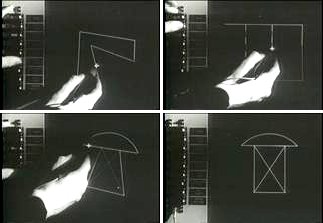
Laying the foundations for future 3D modeling and animation, CGI at its core, creates shapes. Through constant advancements, the first fully computer-generated film was Toy Story in 1995. It revolutionized animation and pushed computational media into the spotlight, especially for film making.
Computational Base of CGI
CGI involves generating images, animations, and visual effects through computational processes. CGI relies on mathematical modeling and algorithms. Some examples include ray tracing, fluid dynamics simulation, procedural generating, and polygonal modeling. . Real-time rendering allows for interactive experiences (video games and VR) to achieve high levels of realism. Procedural generation allows for the production of dynamic worlds rapidly and efficiently.
All mathematical operations done by computers for CGI have become more powerful as graphic processing units (GPUs) have improved with time. For 3D designs, a Cartesian Coordinate System is used.
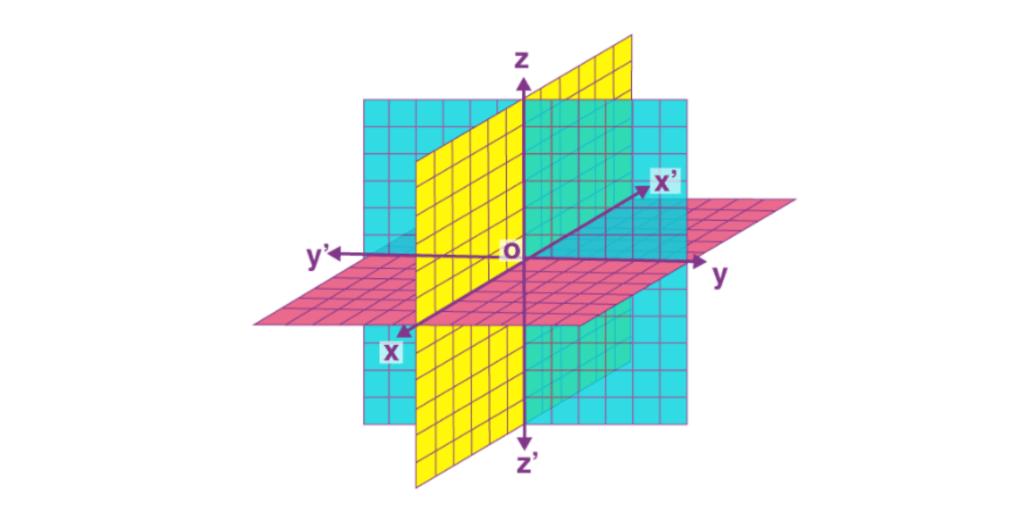
The 3D Cartesian coordinate system is a spatial framework defined by three perpendicular axes (X, Y, and Z) which allow for precise positioning and manipulation of points, lines, and shapes. This coordinate system is necessary for CGI’s modeling and rendering. It uses the coordinate system to calculate lighting, simulate camera movements, and perform translations to objects. Through complex equations, CGI portrays objects in a three-dimensional space. This is the core foundation for all computer-generated imagery.
Media & Culture Impact
CGI is responsible for many technological advancements, but also shifted the audience expectations of realism. It is at the heart of stunning and entertaining visuals as seen in Avatar, Dune, and of course, A Minecraft Movie. CGI has made accessibility to professional-quality media much wider, allowing for indie creators of games, movies, and videos, to enhance their content through computer-powered imaging. Software like Blender, Houdini, and Autodesk Maya are all very powerful, they perform the most realistic and mesmerizing simulations. The best part about them is that they are available to everyone, not just the industry professionals. Computational media that are innovative can now be made my anyone who has a passion for creating or experimenting.
 Blog
Blog 