
Background Info
The procedural method of creating clouds is used frequently by developers and artists for digital media because it enables the use of a dynamic sky that does not rely on pre-made images (pre-rendered). The procedural method relies on “noise” – the function creates natural patterns that will never be repeated. Since you can blend and layer the “noise” values, you can create a simulation of how light reflects off a thick or thin layer of water vapor.
This is why I was curious about the potential for procedural methods to express visual rhythm – the gradual flow or movement that gives a scene life. Visual rhythm has many similarities to music; it uses the elements of time (tempo), pattern (repetition) and transition to move an image out of a stagnant state. Clouds are ideal subjects for visual rhythm as they are always changing while maintaining recognizable form.
Technicalities
To create the “clouds” I utilized a volumetric noise shader that samples multiple layers of Perlin and Worley noise. Each layer corresponds to a scale of density; lower frequency noise generates larger forms, and higher frequency noise layers provide finer details. Through varying the sampling coordinates for the shader, it produces movement that is fluid but unpredictable.
To increase the perceived depth of the cloud layer I utilized raymarched simulations to model the way light scatters throughout a volume. Adjustments to parameters such as the raymarching step size and light intensity influenced the level of brightness or diffusion of the cloud layer. A fundamental realization of this process is that very small fluctuations in either the density or brightness of the cloud layer can produce rhythmic patterns reminiscent of breathing.
In addition, I synchronized these changes with the low frequency components of ambient audio, which caused the cloud layer to grow and shrink with respect to low frequency sound waves. Therefore, what began as a still image was transformed into an environment that responds to sound, resulting in movement that could be thought of as a type of silent music, with rhythm created by light and shadow.
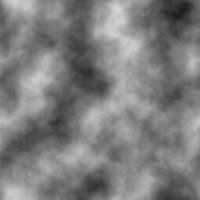
I learned from working with procedural clouds (as opposed to procedural music) that a sense of rhythm or repetition doesn’t have to be limited to the way we hear things and also could include the way we see them visually move. I was able to achieve this by finding an aesthetic balance between the randomness and control of my procedural cloud code which resulted in a harmonic feeling that felt as much mathematically predictable as it did emotionally unpredictable. In each of the slow drifting colors and densities, I found rhythms- proof that you can create the quiet unpredictability of nature through the static code of a computer program.
 Blog
Blog 