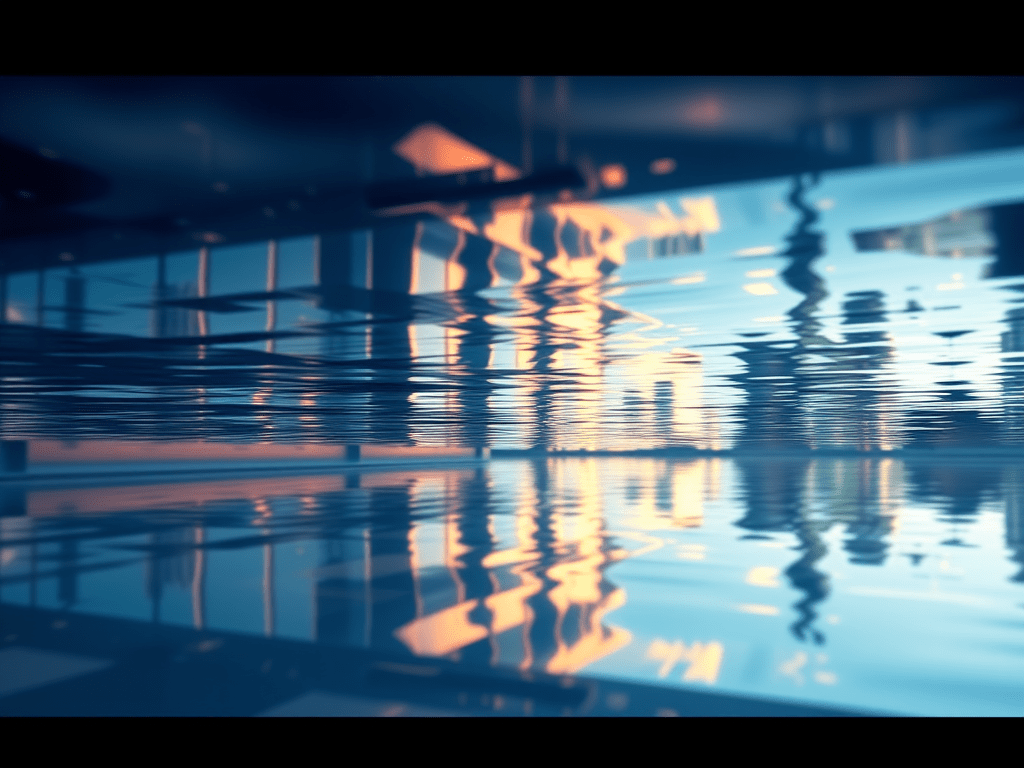
Reflections bring digital environments to life, but simulating them accurately is computationally demanding. Planar render textures offer a balance between realism and performance by generating reflections dynamically without full ray tracing.
The Challenge of Realistic Reflection
For many reflective objects (water, glass, etc.) in game or interactive environments, we need to capture the environment around them correctly and quickly. Since we have a lot of real-time ray tracing capabilities, developers use approximation methods to produce an appearance that is acceptable while keeping CPU/GPU load down.
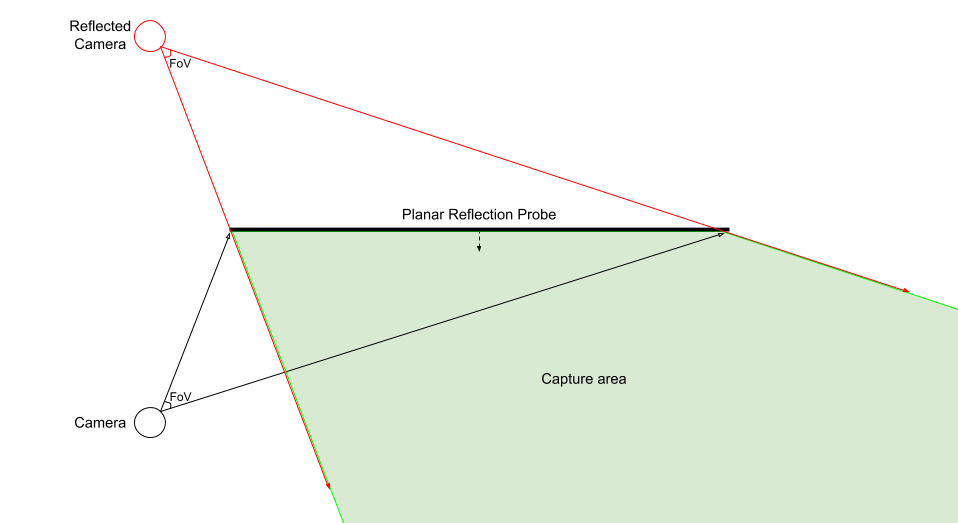
One method to create fast, flat reflective surfaces is by using planar reflections. Rather than rendering all the rays of light, the engine uses a “mirrored” camera position, captures the scene from there and then places the captured scene onto the surface being reflected. The result is a very good, and fast, view-dependent reflection.
Rendering from Another Perspective
A planar reflection system uses a second (opposite) camera to view the reflected world (through the mirror plane). It is flipped horizontally. That captured image of the world is then saved as an image onto a render texture and then that render texture is mapped into the material of the reflective surface.
This illusion relies upon proper transformation of the camera’s orientation and clipping planes so that only what is being viewed will be rendered. Most game engines (Unity and Unreal) allow developers to create their own shaders or utilize ‘reflection probes’ with planar rendering configurations to achieve this.
Most developers also apply some level of blur or distortion to the render texture to simulate minor surface imperfections and refractions. Planar reflections are able to provide consistent results in both real time and under changing light conditions and camera movements because they blend real time and pre-computed data.
Conclusion
Planar render textures demonstrate how visual realism can emerge from efficient problem solving. By rendering a scene from another viewpoint, a flat surface gains depth and presence. This technique bridges artistry and optimization, turning geometry and computation into an illusion that feels effortless and real.
 Blog
Blog 