
An echo is sound reflected through time, but it can also become a visual pattern. By translating delay and feedback into animation, artists can design echoes that exist not in air, but in light.
Turning Delay into Motion
Audio Processing — Delaying a sound creates echo (a repeating signal) based on a very short time interval. How often that repeated sound happens is determined by the amount of “feedback” in the delay. Because each repetition has less and less “energy,” you get a rhythmic effect that fades away as it continues.
Using the same concept for visual effects, this creates layered movement. For example, if you have one object move across a screen, you can create a series of fading trails behind it to indicate its previous locations. These are similar to echoes of movement. The fade-out timing of the trail will be the same as the time of the delay, and the fade out intensity will be related to the amount of feedback used in the delay. Whether you’re using the technique with text, particles, or geometry, delayed duplication provides rhythm and depth to scenes which would otherwise be static.
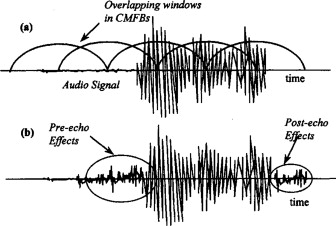
This technique is beautiful because it links two senses. An echoing sound and a trailing image both describe persistence; they describe what remains after some energy moves through time.
Visualizing Reflections in Time
A visual echo system is created by taking some of an object’s most recent video frames of movement and storing them in an algorithm to create a continued path. With a gradual decrease over time (decay), the continuing trail of motion is produced and continues to exist until it disappears. A frame buffer feedback loop (using a shader) can be used to produce this visual effect by blending previous frames with the current frame at a decay rate that can be adjusted.
When synchronized with an audio delay, the coherence between the sight and hearing becomes apparent. An example of this would be that when a beat has an echo, the visual pulse will have faded in to match the delay tap for each repetition. It produces a sense of immersion because both your eyes and ears are observing the same physical principle of reflection.
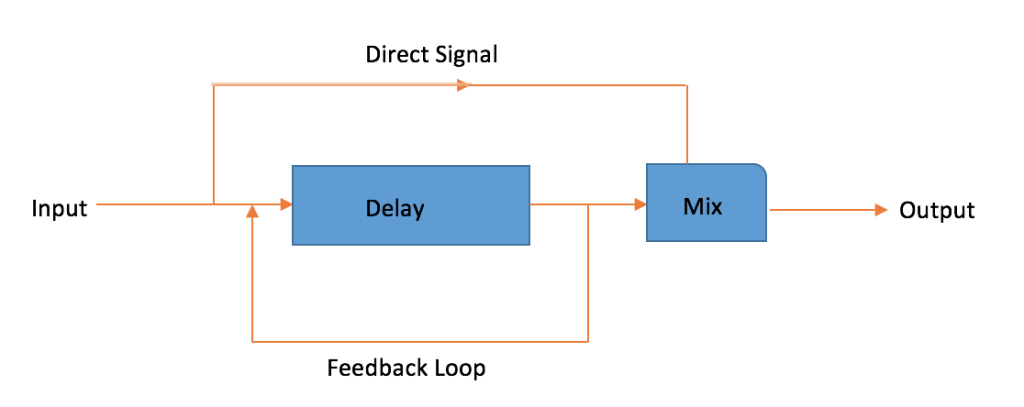
Changing the amount of delay and the strength of feedback allows designers to move from sharp repeated reflections to soft dissolving reflections; a good representation of the difference between an echo in a canyon and reverb in a hall.
Reflection
The similarity between sound and motion in the context of designing visible echoes demonstrates the shared vocabulary of describing energy played back through time, eventually disappearing into memory. Combining delay algorithms with visual persistence allow designers to make rhythm tangible – where every beat leaves a trace and every reflection tells a story.
 Blog
Blog 