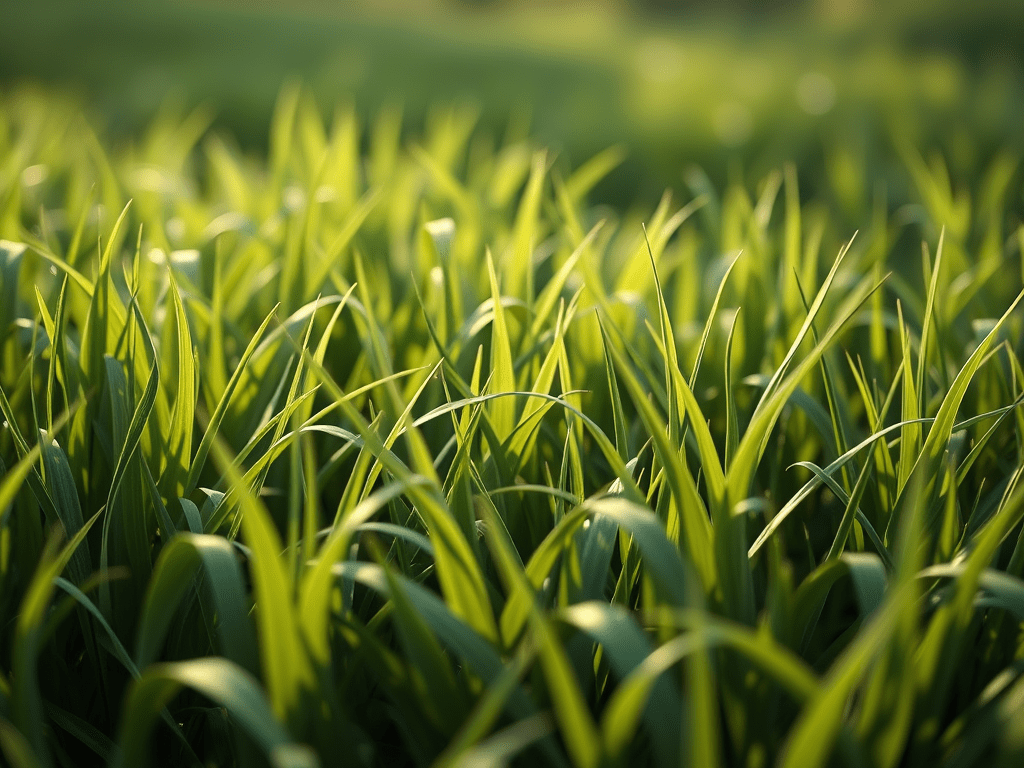
Grass animation plays a subtle but crucial role in making virtual environments feel alive. Using sine-wave deformation, artists and developers can simulate the natural rhythm of wind without overwhelming computational cost.
The Physics of Gentle Motion
Each individual blade of real grass is affected by wind differently because each one reacts differently to different amounts of wind force (or pressure), turbulence, and its own inertia (mass). A game engine simulating all these elements at this level of detail for many blades in open-world games, or in CGI scenes where there are hundreds of blades, could be extremely expensive.
Wave functions from trigonometric mathematics can provide a very good simulation of grass movement. Wave functions applied to vertices on the model of the grass cause it to move organically and continuously as if it were really being blown by the wind. Sine waves have a periodicity which creates a smooth oscillation when passed over a field that has been subjected to wind. If the phase and amplitude of the sine wave for each blade of grass are varied by a small amount compared to others, the overall effect will appear to be random and more natural, rather than synchronized.
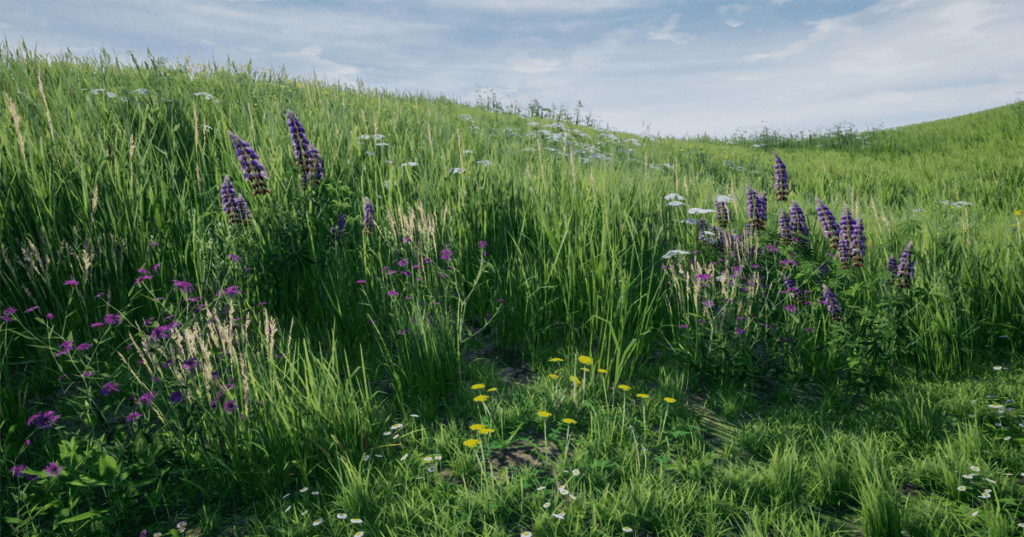
This method provides a simulation of realistic environmental motion — the subtle randomness that characterizes the look and feel of being outdoors — without having to simulate the complexity of physics.
Implementing Wave Deformation
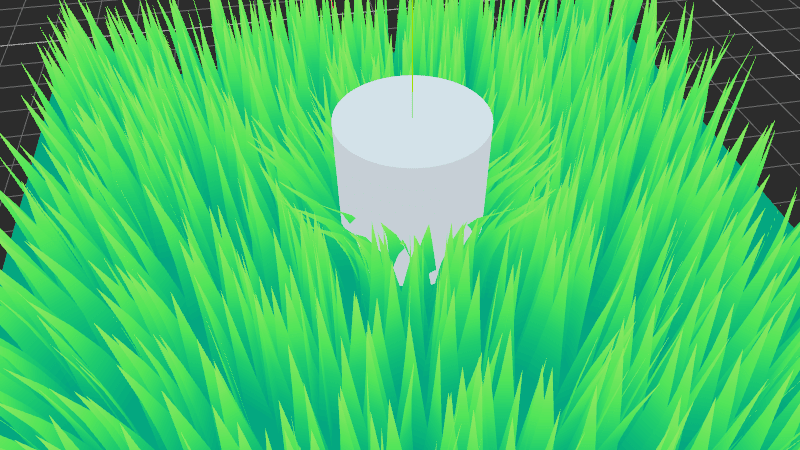
Grass animation in many engines is implemented as part of the vertex shaders. The offset for each vertex is calculated using a sine function that calculates the vertical or horizontal displacement of each vertex over time, and also dependent on position. This could be as simple as an equation such as:
offset = sin( (position.x frequency) + time speed ) amplitude
The parameters above control how often the wave pattern repeats (frequency), how fast the “wind” is moving (speed), and how large the displacement will be (amplitude). To add some randomness to the pattern and prevent it from appearing to be just repeating, you would multiply the position by noise or random phase values.
To add more complexity to your simulation, you can also blend multiple sine wave patterns with different amplitudes to create a gusting effect, or even simulate a wind that is constantly changing direction. In CGI animation this same concept applies to the simulation of cloth and foliage; allowing for the creation of a scene that has a very cinematic feel due to the added visual realism created by animating natural elements.
Conclusion
Sine-wave deformation demonstrates how simple math can evoke the complexity of nature. A single oscillation formula transforms static geometry into something that breathes and sways. Whether in a game or a film, these patterns of movement create the illusion of life—reminding us that realism often starts with rhythm, not detail.
 Blog
Blog 