
Fractal Brownian motion, or fBm, is a method for creating smooth, natural variations through layers of random noise. In audio design, it can be used to generate textures that resemble evolving ambient soundscapes.
The Concept of Layered Randomness
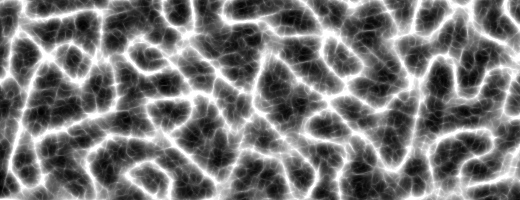
The Fractal Brownian Motion (fBm) method for generating fractal surfaces, and thus fractal sounds, is built from many layers of random “noise” signals with different frequency and amplitude levels. These layers provide finer and finer details on each successive scale, and create complex structures that feel both ordered and natural. While fractal fBm is often used in simulation for cloud formations, terrain, and wave patterns, the same principles are being applied to sound design.
While pure white noise has no correlation between the frequencies and therefore does not have any dynamic quality, fBm generates correlated randomness as well as the sensation of continuity and self-similarity of the motion. Therefore, fBm can be used to generate a sense of spatiality or environmental textures within an auditory experience. For example, fBm could produce a sense of wind, water, or distant crowd noise.
From Equations to Sound
In order to implement fBm on an audio level, multiple levels of Perlin or simplex noise are applied as modulation to amplitude, frequency, and/or filter characteristics throughout time. At each octave, there will be a larger, slower variation on the audio signal. The combination of all of these layers will generate a fluid and continuously changing sound that does not loop.
As an example, an ambient pad can have its pitch or filter cutoff modulated with fBm in order to produce small movements in the pad that mimic natural movements. Increasing the number of layers added to the modulation will add richness to the resulting sound, and increasing or decreasing the persistence (amplitude of each octave) of the modulation will change the smoothness or chaos of the overall sound.
The same process used above for generating ambient pads can also be applied to procedural audio found in video game development and installation art in which environments need to contain organic sounding, non-looping, and yet cohesive soundscapes.
Reflection
Fractal Brownian motion bridges mathematics and perception by transforming randomness into recognizable order. In ambient design, it replaces repetition with evolution, allowing sound to breathe and drift naturally. Each layer of noise adds depth, proving that complexity often arises not from precision, but from the careful shaping of chaos.
 Blog
Blog 